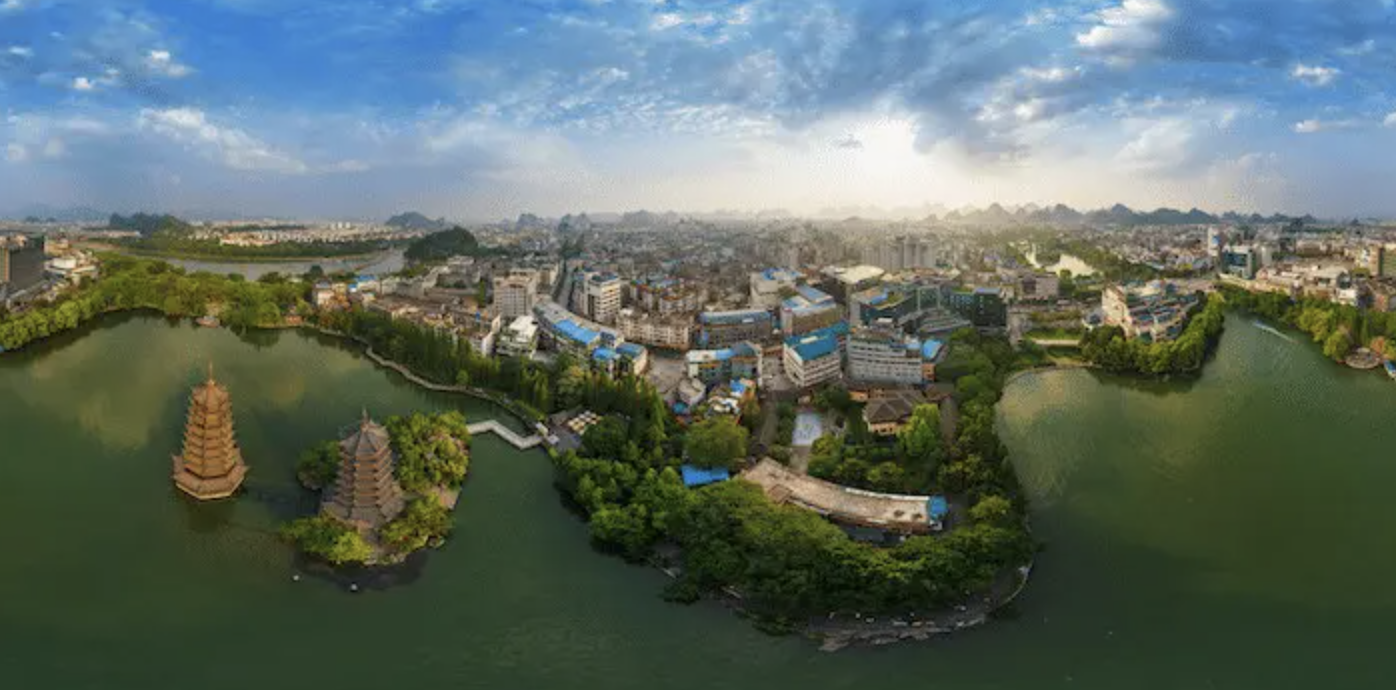
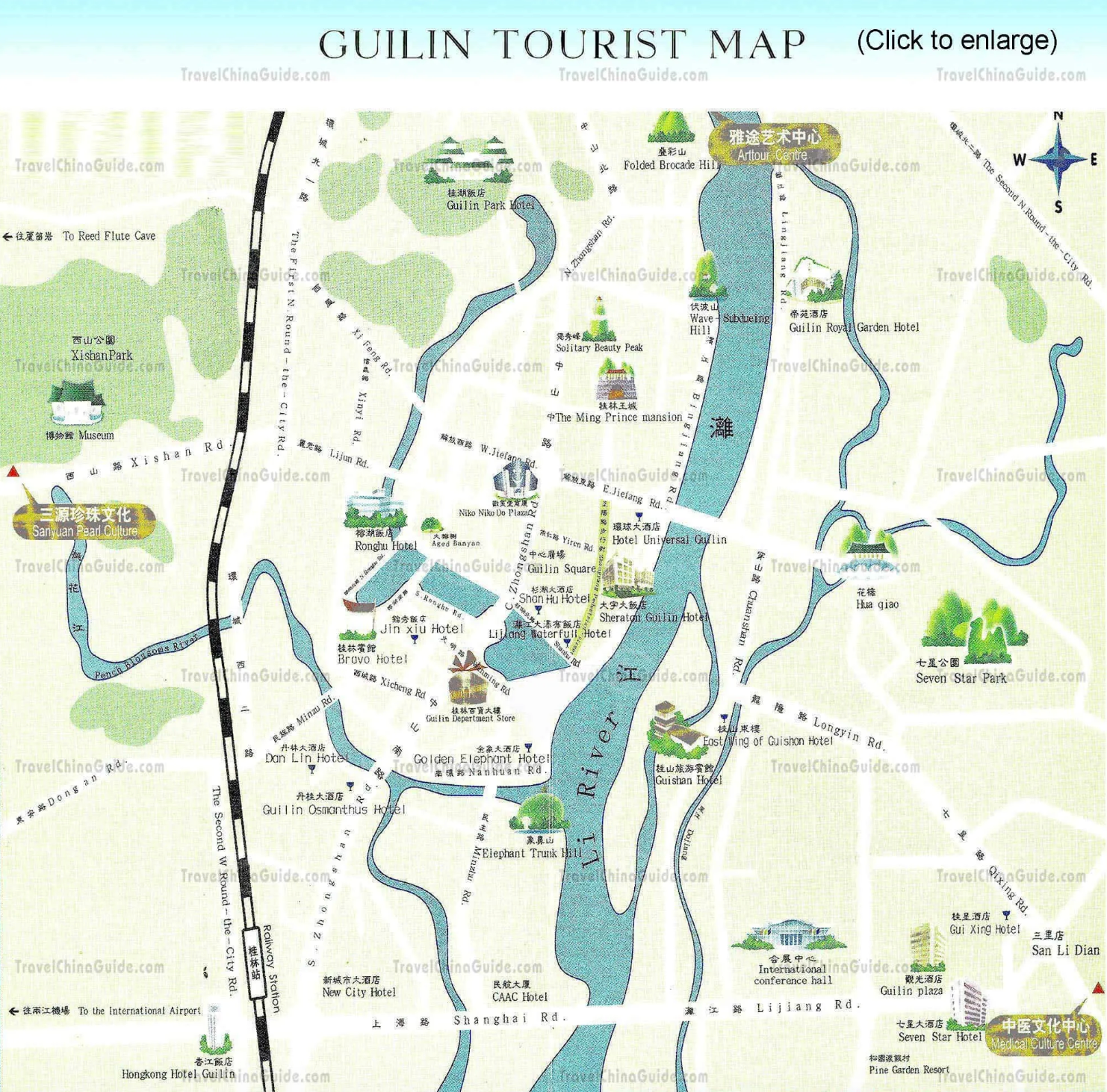
Mum and I flew in from Hong Kong and stayed the first night in Guilin city. Guilin is a prefecture-level city in the northeast of China's Guangxi Zhuang Autonomous Region. Within the Guilin prefecture is the area along the Li River down to and including Yangshuo to the south and the Longji rice terrace fields to the north of Guilin city.
In 1996, the Guilin prefecture had roughly 1.2 million people in total with Guilin city being much larger than Yangshuo. In 2020, the Guilin prefecture has nearly 5 million people, which is an increase of 420% in 25 years. This shows the massive influx into the region due to its success as one of China's premier tourism attractions. Looking between photos I took on the trip with Mum and more recent photos it is evident the increase in buildings and infrastructure.
https://thewanderingsprocket.com/wp-content/uploads/2026/05/Image-29-4-2026-at-9.00-pm.webp
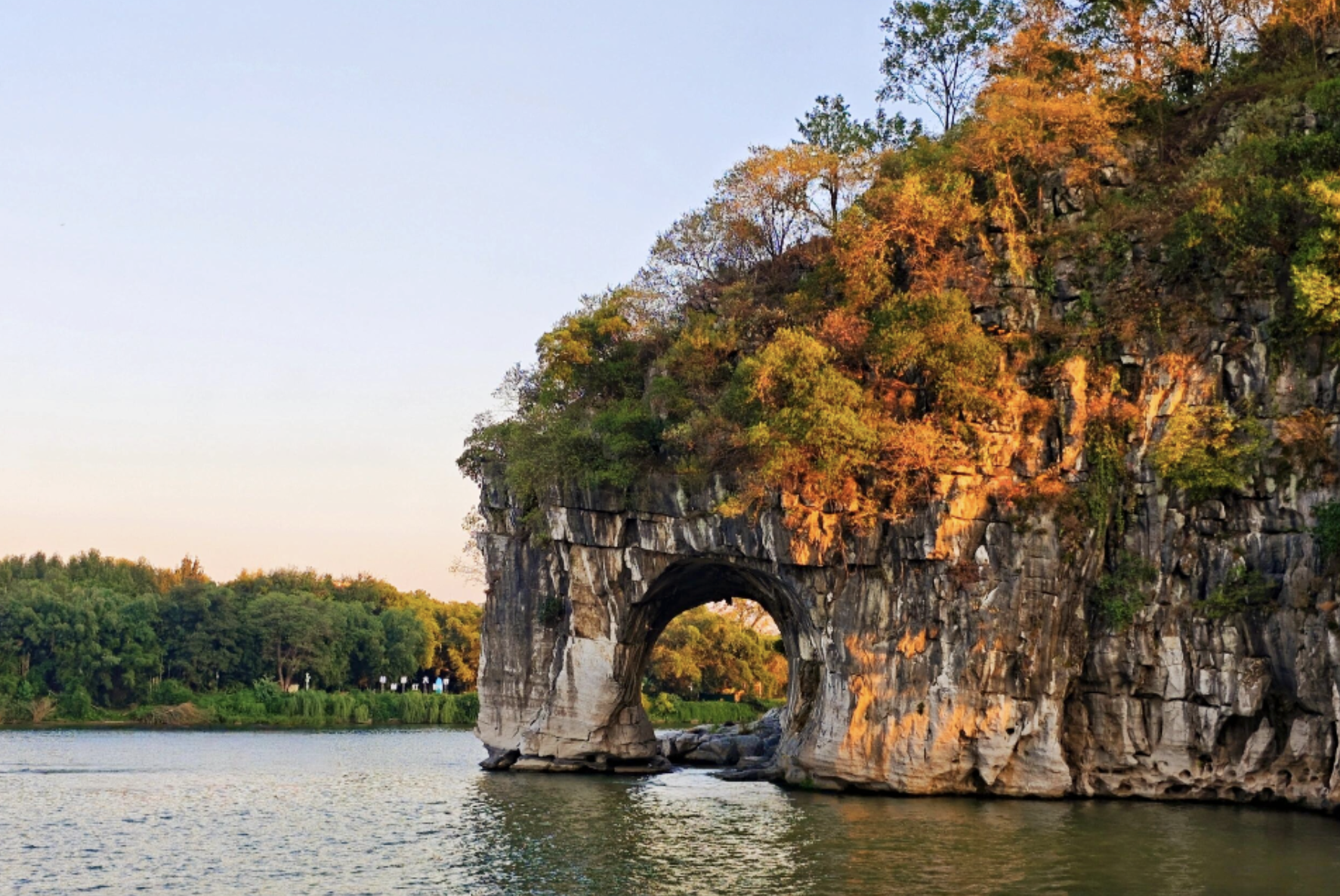
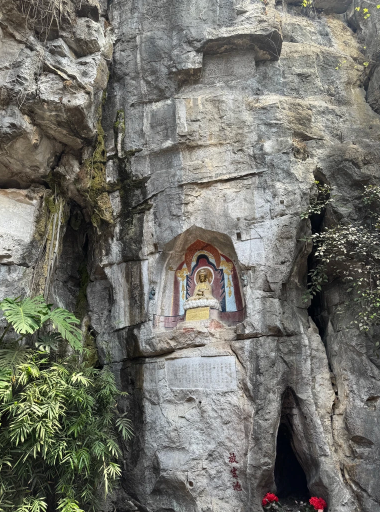
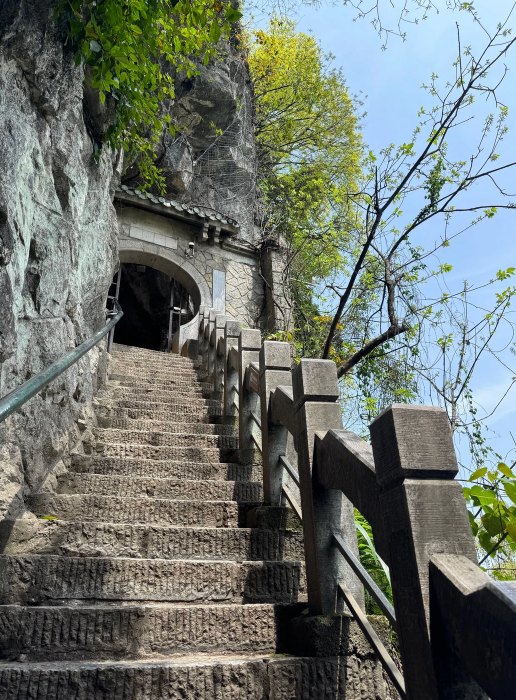
Guilin city is the entry point for exploring the area. We explored the city and found Elephant Trunk Hill fantastic. It is the official symbol of Guilin. This unique rock formation arches over the Li River, resembling an elephant dipping its trunk into the water.
Other attractions include the Reed Flute Cave, however I couldn't bring us to visit it. I don't agree with the heavy addition of coloured lights and music to beautiful caves on the premise the cave is not stunning enough without the additions. Guilin city is also the base for a day trip to the Longji terraced rice fields around Longshen. We made this trip towards the end of our trip, see later in this timeline.
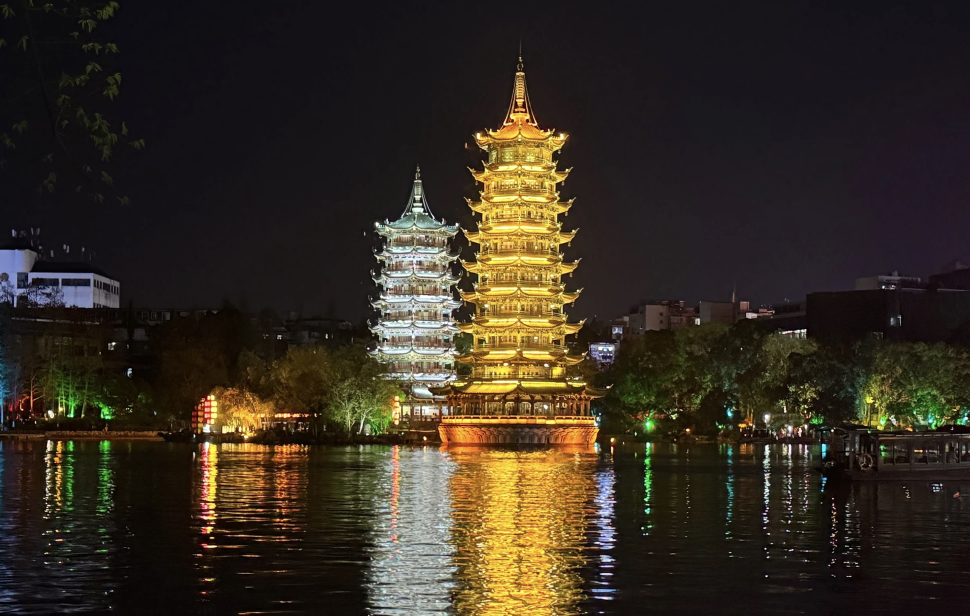
In the time since 1996, the new infrastructure developed includes the Two Rivers and Four Lakes which is a scenic network of interconnected waterways in the city. A night cruise offers dazzling views of illuminated pagodas, bridges, and pavilions. This also includes the twin Sun and Moon Pagodas (one bronze, one glass), located in Fir Lake.